
Asphalt Services in Grand Rapids, MI
Local Asphalt Contractor Expertise
In the Eastown and downtown core of Grand Rapids, Michigan, asphalt parking lots face daily wear from freeze-thaw cycles, heavy foot traffic, and seasonal salt application. An experienced asphalt contractor in Grand Rapids, MI protects your investment through crack filling, sealcoating, repairs, and striping. Whether you manage a retail lot, office building, or multi-tenant property, professional maintenance keeps your surface safe and extends its lifespan years beyond neglect.
How We Work
A clear, step-by-step process keeps you informed and your parking lot in top condition.
Site Inspection
We assess cracks, surface condition, drainage, and traffic patterns to diagnose what your lot needs.
Planning & Prep
We schedule around your hours, clean the surface, remove debris, and prep equipment for a seamless job.
Repair & Seal
Crack filling happens first, then sealcoating applies a protective barrier against UV, moisture, and salt.
Striping & Finish
Fresh parking lines, ADA markings, and final cleanup ensure your lot looks professional and safe.
You'll always know what's happening next—and when.
Our Services
Asphalt Sealcoating
Sealcoating restores the rich black finish while blocking UV rays, standing water, and road salt—critical in Grand Rapids winters. A protective seal slows oxidation and keeps your asphalt flexible through freeze-thaw cycles.
Apply every 2–3 years for maximum protection.
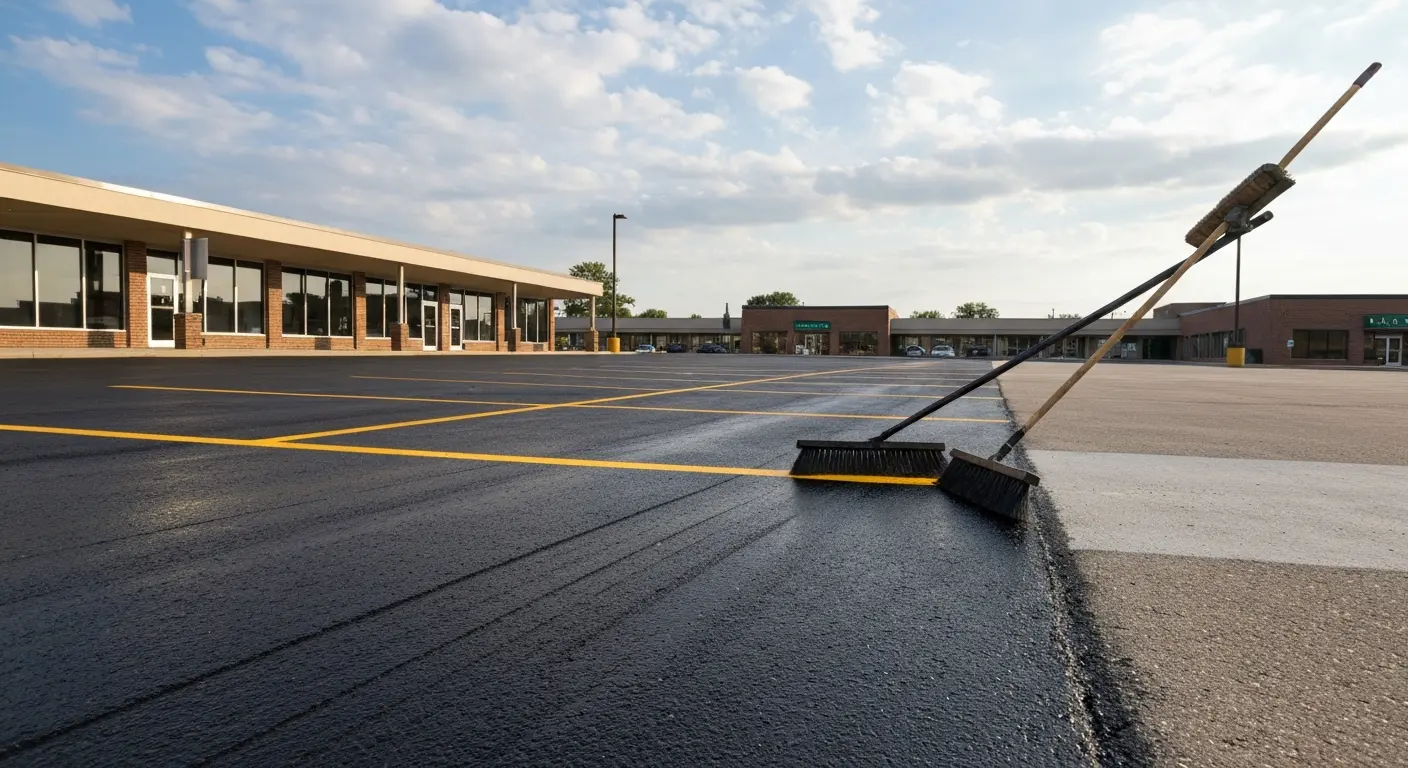
Fresh sealcoat extends pavement life across Eastown shopping districts and office parks.
Crack Filling
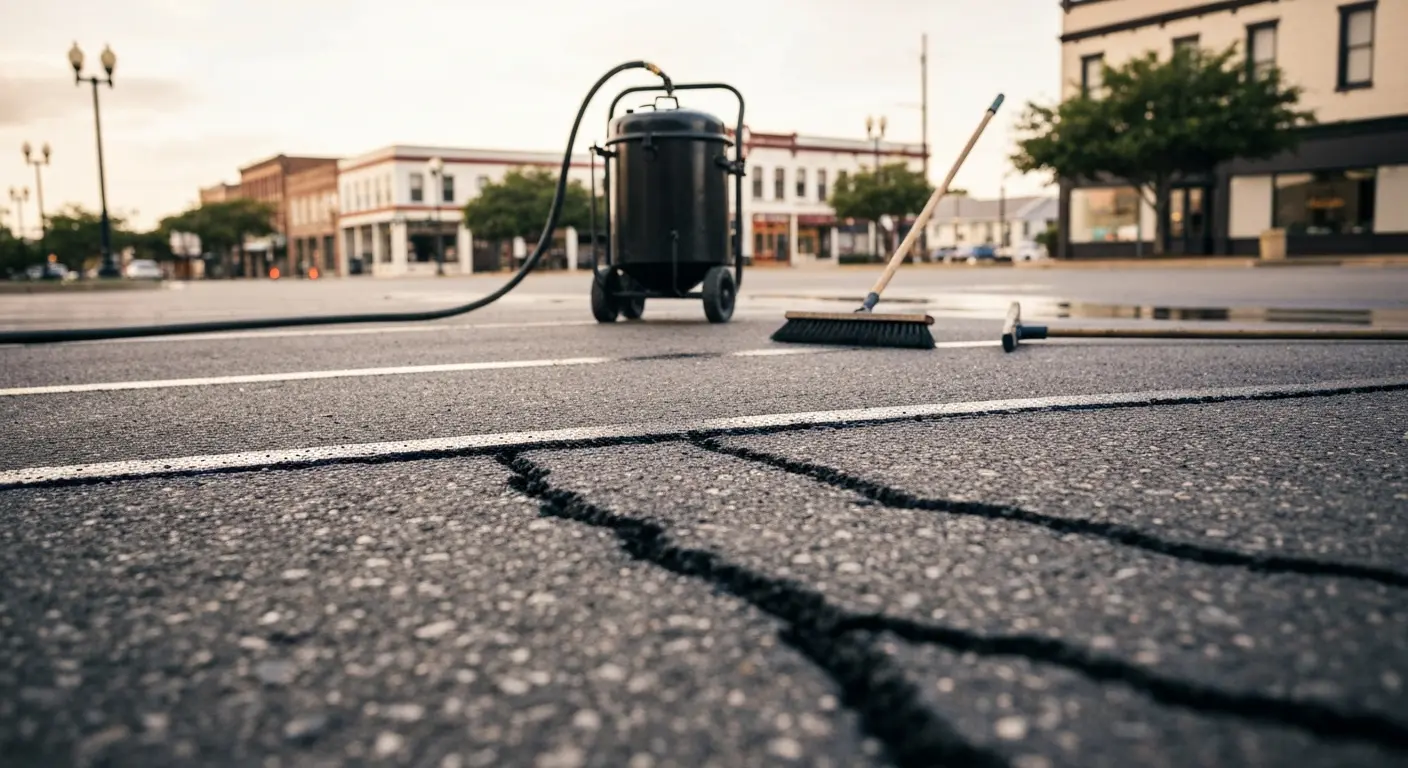
Preventing water infiltration in downtown parking areas maintains structural integrity year-round.
Small cracks widen fast when water seeps underneath and freezes. Filling cracks annually stops damage before it becomes expensive.
We use rubberized, flexible materials that move with temperature changes.
Asphalt Repairs & Patching
Potholes, ruts, and surface spalling require targeted repair to prevent further collapse. We assess damage depth and apply lasting patch solutions.
Catch repairs early to avoid full-lot replacement costs.
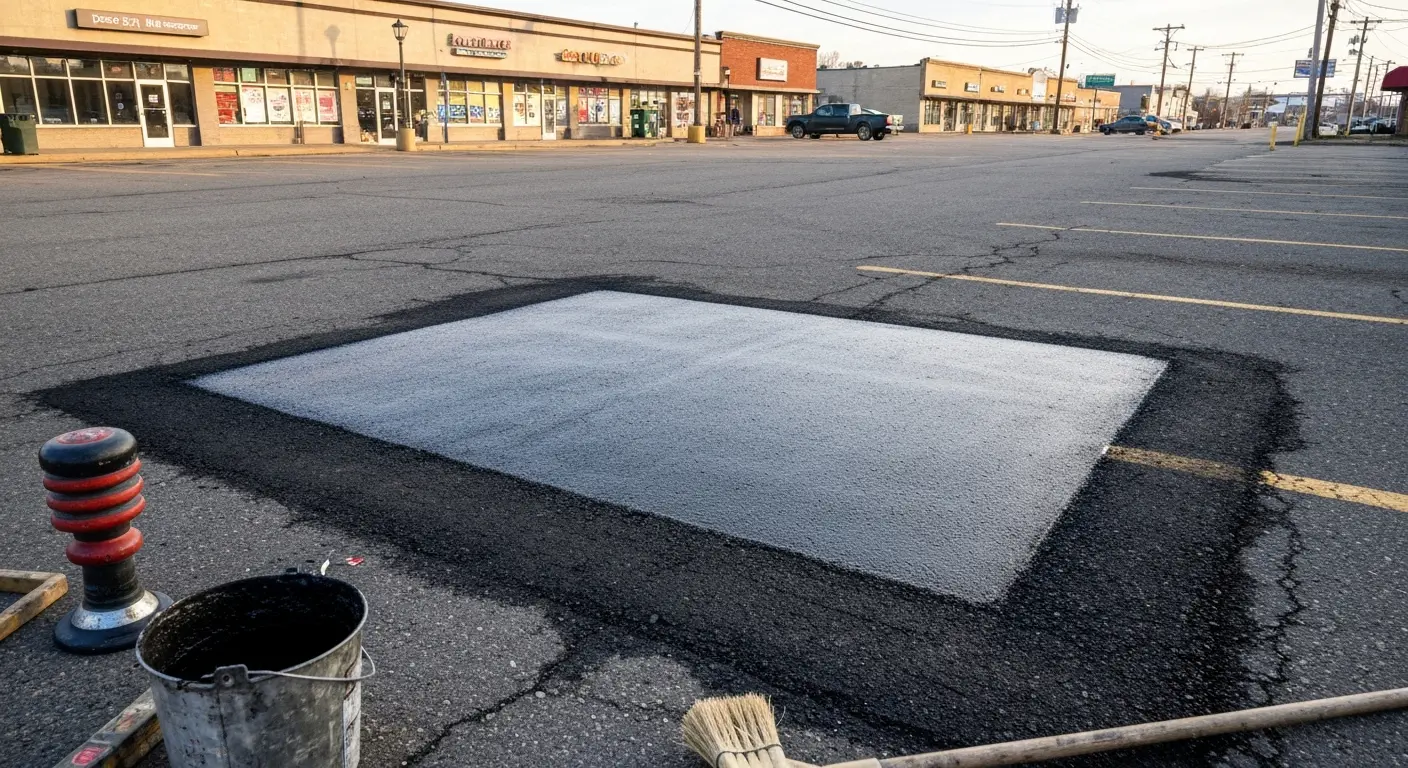
Pothole patching in commercial lots near transit routes and retail hubs.
Parking Lot Striping
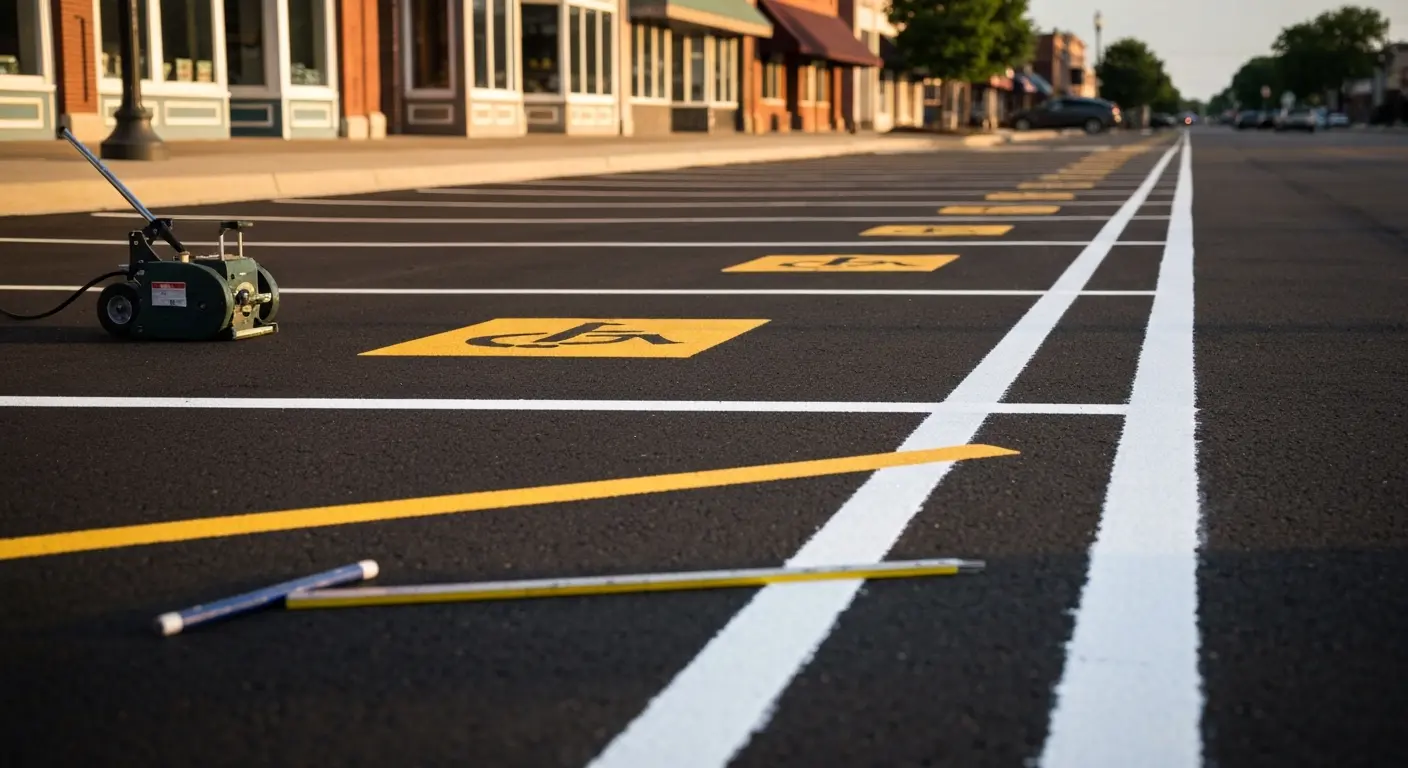
Fresh striping on Heritage Hill and downtown commercial parking maintains visibility and code compliance.
Clear parking lines, handicap spaces, and directional arrows improve safety and curb appeal. Striping also makes maintenance issues easier to spot.
Refresh lines every 18–24 months for durability.
Why Local Expertise Matters
Grand Rapids Winter Challenges
Michigan's freeze-thaw cycles and road salt are uniquely damaging to asphalt. Contractors who understand local weather patterns protect your investment better.
Routine maintenance—crack filling and sealcoating—prevents the accelerated deterioration that salt and thaw cycles cause.
Safety & Compliance
Cracked, potholed surfaces create liability for property owners. Professional striping meets ADA requirements, and crack-free pavement reduces slip-and-fall risk.
Cost Control
Sealcoating, crack filling, and repairs cost a fraction of resurfacing or replacement. A proactive schedule avoids emergency repairs and budget surprises.
Serving Grand Rapids & Surrounding Areas
We work with property owners and managers across downtown Grand Rapids, Eastown, Heritage Hill, Kentwood, and Byron Center. Whether you manage a retail center, multi-tenant office building, or church lot, we schedule work around your hours.
Easy Access in Downtown
Downtown Grand Rapids has abundant on-street and lot-based parking, making it simple for crews to reach your property during scheduled service windows. We coordinate with businesses to minimize disruption.
Local Insight
We understand Grand Rapids building codes, event-day traffic patterns, and weather cycles. This local knowledge helps us recommend maintenance schedules that fit your property's real needs.
Frequently Asked Questions
What should I do if my parking lot is severely cracked?
Contact a contractor for a full inspection to diagnose the cause. Shallow cracks can often be filled and sealed. Deeper damage may require patching or resurfacing. The sooner you address it, the less expensive the repair.
How often should I sealcoat a parking lot?
Most commercial lots benefit from sealcoating every 2–3 years, depending on traffic volume and weather. High-traffic properties may need more frequent applications. Your contractor can recommend a schedule.
Is crack filling really necessary if I sealcoat the lot?
Yes. Sealcoating over unfilled cracks won't stop water infiltration underneath. Proper maintenance requires filling cracks first, then sealing the entire surface. This two-step approach prevents sub-base erosion.
What's the difference between cold-applied and hot-pour crack filling?
Cold-applied filler uses a clay-filled polymer liquid. Hot-pour uses heated rubberized asphalt. Hot-pour sets faster and is typically better for large areas. A professional contractor selects the right material based on crack size and your lot's condition.
How do I know if my parking lot is ready for maintenance?
Request a free inspection. Visible cracks, fading color, standing water, or potholes are signs it's time. Early maintenance extends your pavement's life and costs far less than waiting for major damage.
DISCOVER WHAT OUR CUSTOMERS HAVE TO SAY ABOUT US
REVIEWS
proudly serving these areas
Ada, MI
Byron Center, MI
Coopersville, MI
Fremont, MI
Granville, MI
Grand Rapids, MI
Greenville, MI
Holland, MI
READY TO take the next step?
get a free quote TODAY!
COMPANY
(616) 358-0080
QUICK LINKS
our services
service areas
operating HOURS
Mon: 7:00 am - 8:00 pm
Tue: 7:00 am - 8:00 pm
Wed: 7:00 am - 8:00 pm
Thu: 7:00 am - 8:00 pm
Fri: 7:00 am - 8:00 pm
Sat: 7:00 am - 8:00 pm
Sun: Closed - Closed